“I hear you.”Start with understanding.
Communication · Free tool
Validation in everyday words
Practice acknowledging a feeling while staying clear about your own limits.
Compassion. Practical skills. Hope.
Loving someone through mental illness or emotion dysregulation can feel overwhelming. You deserve understanding, practical tools, and support for your own journey, too.
Family relationship coaching & DBT-informed education

There is more than one way to begin
Start with a conversation, learn at your own pace, or try a practical tool. Choose what fits your life today.
Work through your real-life relationship challenges with practical, individual support, designed to help you right where you’re at.
Explore coaching 02 / SELF-PACED LEARNINGUnderstand the skills, see everyday examples, and practice at a pace that works for you.
Explore the course 03 / A SMALL FIRST STEPBegin with a reflection, a helpful phrase, or a simple tool you can use today.
Try a free tool“I can love you
and still have
a boundary.”
Family relationship coaching
You don’t need the perfect words or a calm family. Coaching offers space to slow down, understand what is happening, and practice a response that reflects your values.
Coaching is not therapy. It focuses on education, practical skills, and relationship goals. We do not diagnose or treat mental health conditions.
Understand. Practice. Repeat.
Our educational courses draw on DBT skills to help families practice more effective ways of responding.
 THE LEARNING PATH
Self-paced online learning
Explore mindfulness, validation, radical acceptance, distress tolerance, and communication through practical lessons and reflection.
Contact Jennifer about course availability and enrollment.
The practice corner
You don’t have to change everything at once. Start with one thoughtful pause, one different sentence, or one clear limit.
Showing all 4 resources
Communication · Free tool
Practice acknowledging a feeling while staying clear about your own limits.
Boundaries · Free worksheet
Turn an overwhelming situation into a clear, respectful next step.
Pause.Faith & reflection · Free guide
A gentle prompt for honest reflection, prayer, and your next practical action.
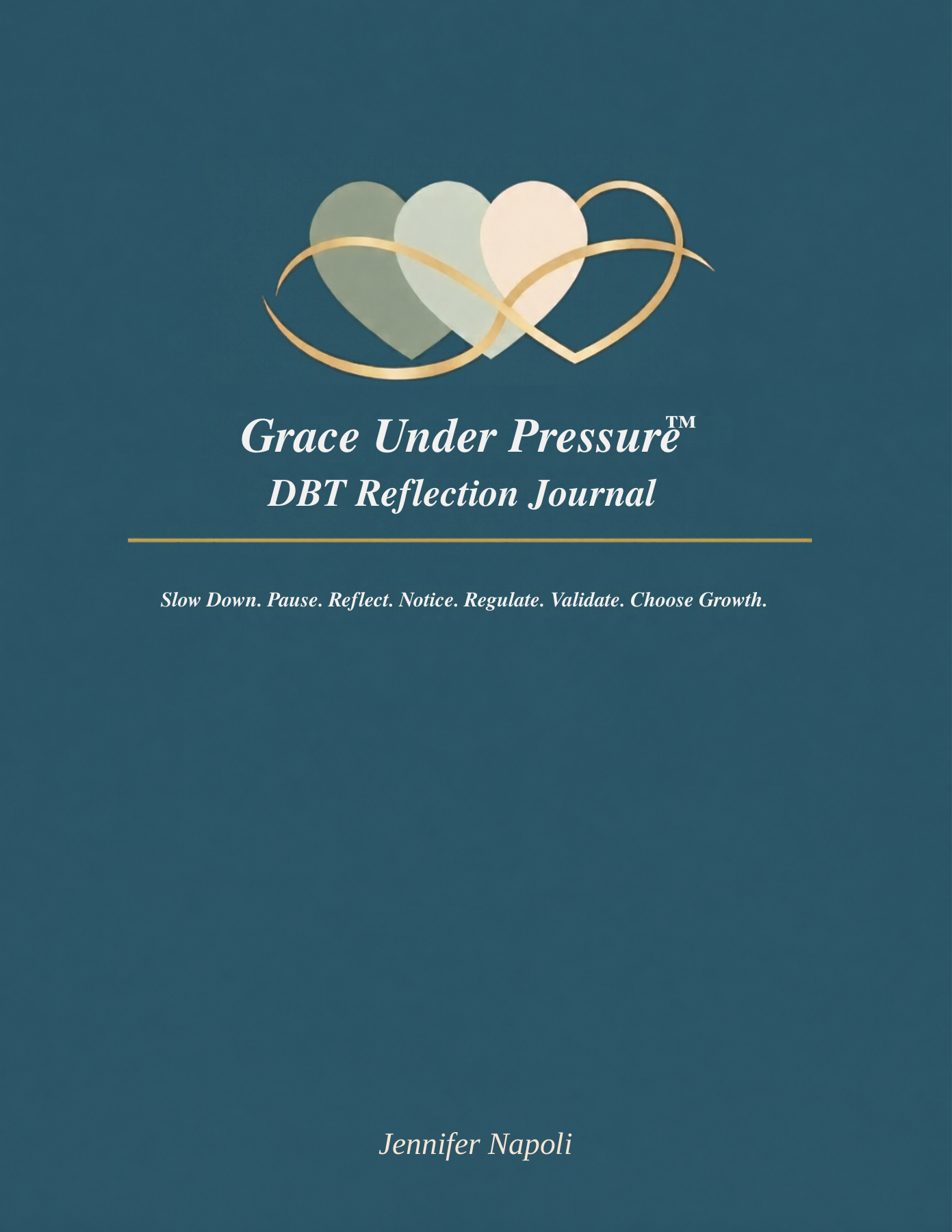
The guided journal
Explore the Grace Under Pressure™ DBT Reflection Journal by Jennifer Napoli. Make space to notice, reflect, and practice, with room for faith along the way.
Contact Jennifer about journal availability.
These tools are educational. Choose language that fits your situation and prioritize your safety.
Meet Jennifer Napoli
Family relationship coach
Founder, Grace Under Pressure™
Grace Under Pressure™ grew from lived family experience and the search for a more compassionate, effective way to relate.
Jennifer has taught DBT skills to families since 2017. Her coaching brings together practical tools, empathy, and respect for the challenges families face when someone they love experiences mental illness or emotion dysregulation.
Christian faith can be woven into coaching and reflection when you want it. There is room for honest questions, hard feelings, and a hope that doesn’t ask you to pretend.
A little clarity before you begin
Choosing support should feel clear and approachable.
Coaching focuses on practical skills, communication, boundaries, and goals you choose. Therapy is clinical care provided by a licensed mental health professional and can include assessment and treatment. Grace Under Pressure™ coaching does not provide diagnosis, treatment, or emergency services, and can sit alongside professional care.
No. Courses and resources introduce the ideas in everyday language, with examples and opportunities to practice. You can begin with a free tool and grow from there.
No. Faith integration is available when you want it. Coaching can focus on practical relationship skills, and faith-based resources are clearly labeled so you can choose what feels right for you.
Browse the shop for available products. For coaching availability or course questions, use “Talk with Jennifer” to find contact details and prepare your questions.
One step is a beginning
Let’s find a practical, compassionate place to start.